Helping Hands Kenya: The House Building Project
Helping Hands Kenya (HHK) is dedicated to transforming the lives of vulnerable families by providing safe, secure, and dignified housing. In many rural communities, families live in mud structures with thatched roofs that are susceptible to heavy rains, insects, and structural collapse. The HHK house building project addresses these challenges by providing durable, semi-permanent homes and essential sanitation facilities.
The Reality of Rural Housing: Why We Build
Across rural communities, many families are forced to live in traditional, makeshift structures built from mud, sticks, and thatched roofing, with bare dirt floors. While these homes are a testament to resourcefulness, they offer little protection against the harsh elements and keep families trapped in a cycle of instability.
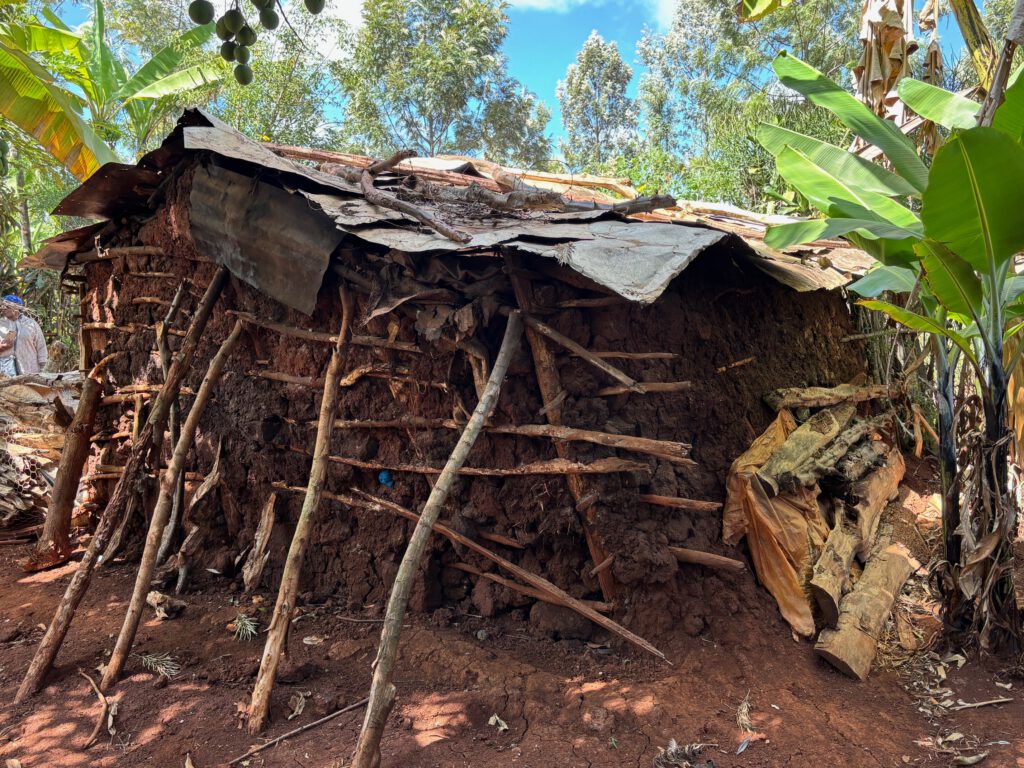
The perpetual cycle of rebuilding and treating preventable illnesses drains a family’s already limited financial and physical resources. Replacing these inadequate shelters with durable, secure homes is not just about providing a better building; it is an urgent necessity to eliminate these health hazards, restore dignity, and provide the foundational stability families need to thrive.
Building a Foundation for the Future
The core of the project is the construction of a standard residential structure and a private latrine.
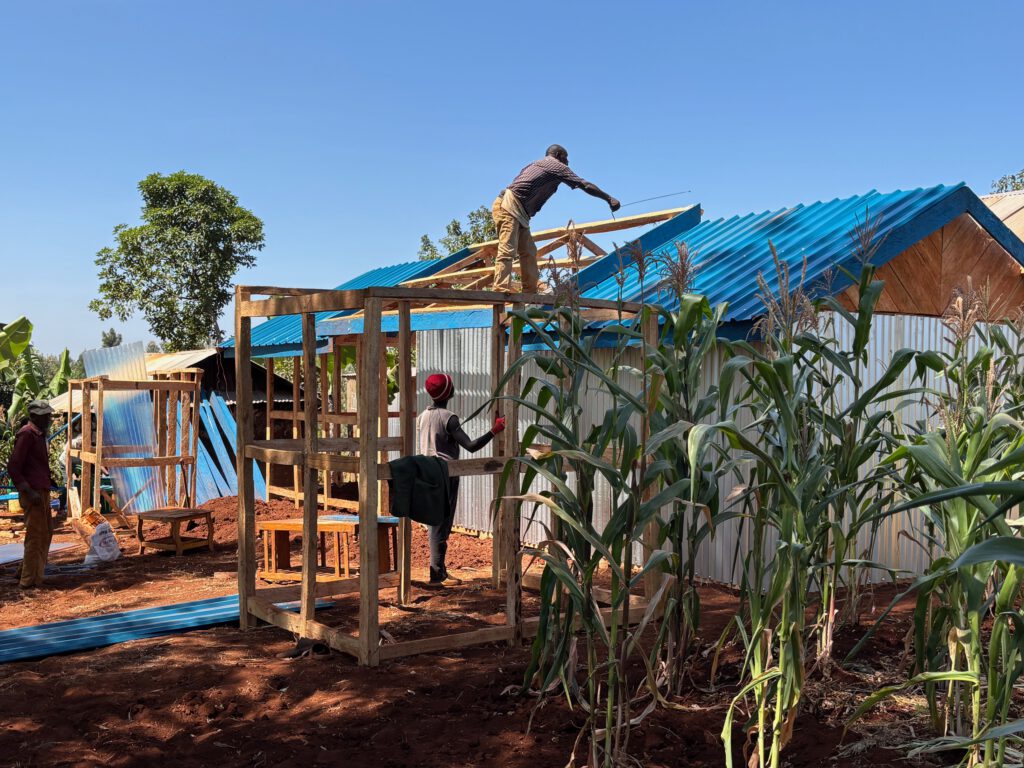
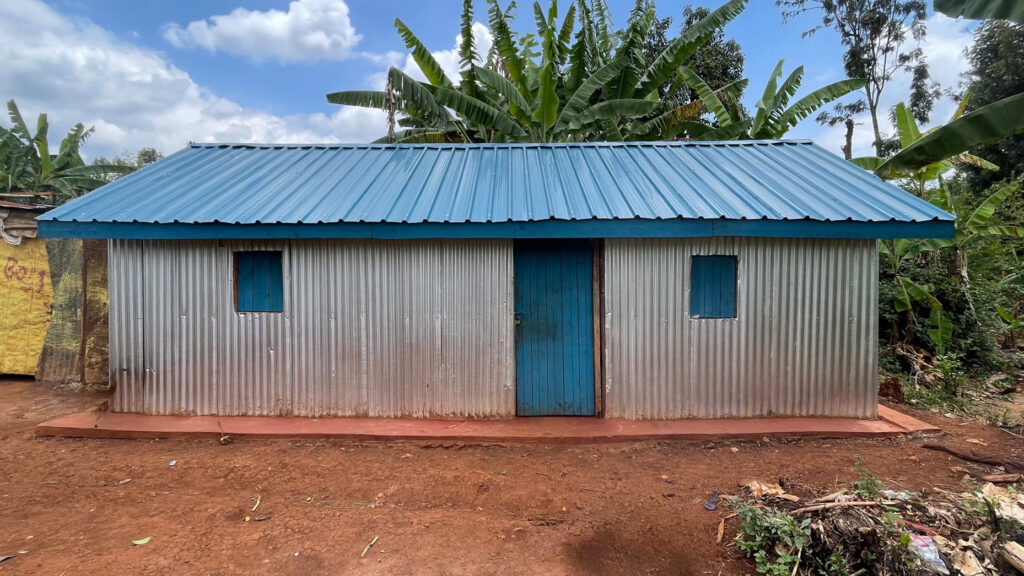
The House: Each home is designed to provide immediate protection from the elements. Constructed with a sturdy timber frame and high-quality corrugated iron sheets (mabati) for the walls and roof, these homes are built to last. A critical feature of the HHK home is the poured concrete floor, which replaces traditional dirt floors. This significantly reduces the risk of jigger infestations and other parasites, providing a cleaner environment for children to play and sleep.
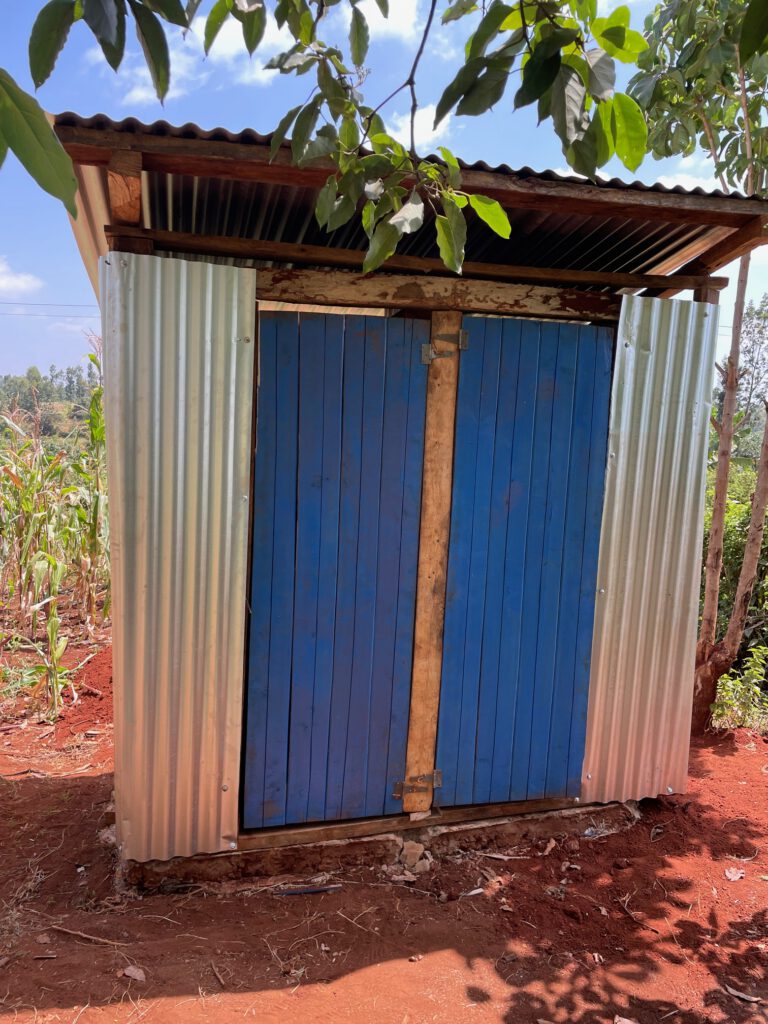
The Latrine: Sanitation is a cornerstone of health. Along with the house, HHK constructs a private pit latrine for each family. This facility provides privacy and dignity while drastically reducing the spread of waterborne diseases and improving overall community hygiene.
The Construction Process
The construction of an HHK home is an efficient process designed to move a family from a state of vulnerability to security in a short period.
- Site Preparation: The ground is cleared and leveled to prepare for the structure.
- Framing: A timber skeleton is erected to provide the structural integrity of the home.
- Cladding and Roofing: Corrugated iron sheets are fixed to the frame. This material is chosen for its durability and its ability to keep the interior dry during Kenya’s intense rainy seasons.
- Flooring: The final stage of the house involves pouring a cement slab floor. This creates a permanent barrier between the residents and the damp earth.
- Sanitation: Simultaneously, a pit is excavated and a secure latrine structure is built nearby.
Partnership through Participation
Helping Hands Kenya operates on a model of partnership rather than traditional charity. A key requirement of the project is that the recipient family must actively participate in the building process.
Families contribute through “sweat equity”—assisting with site clearing, carrying materials, or providing water for the construction. This participation ensures that the family has a sense of ownership over their new home. It is not just a gift; it is a collaborative achievement. By working alongside the construction team, families gain a deeper connection to their new environment and the pride of having helped build their own future.
The Impact on the Family
The transition from a mud hut to an HHK home is life-changing. The impact is felt across several key areas:
- Health and Hygiene: The combination of a concrete floor and a private latrine leads to an immediate decrease in illness. Children are less likely to suffer from respiratory issues caused by dampness or parasitic infections from dirt floors.
- Safety and Security: Families can sleep soundly knowing they are protected from the rain, wind, and potential intruders. For young children and women, the safety of a lockable, sturdy door provides invaluable peace of mind.
- Educational Opportunity: With a dry and stable home, children have a consistent place to study. The stability of safe housing is often the first step toward improved school attendance and performance.
- Economic Stability: By removing the constant need to repair a crumbling mud structure, families can redirect their limited resources and energy toward agriculture, small business, or their children’s education.
A house from Helping Hands Kenya is more than just a structure; it is the starting point for a family’s journey out of poverty and toward a life of hope and dignity.